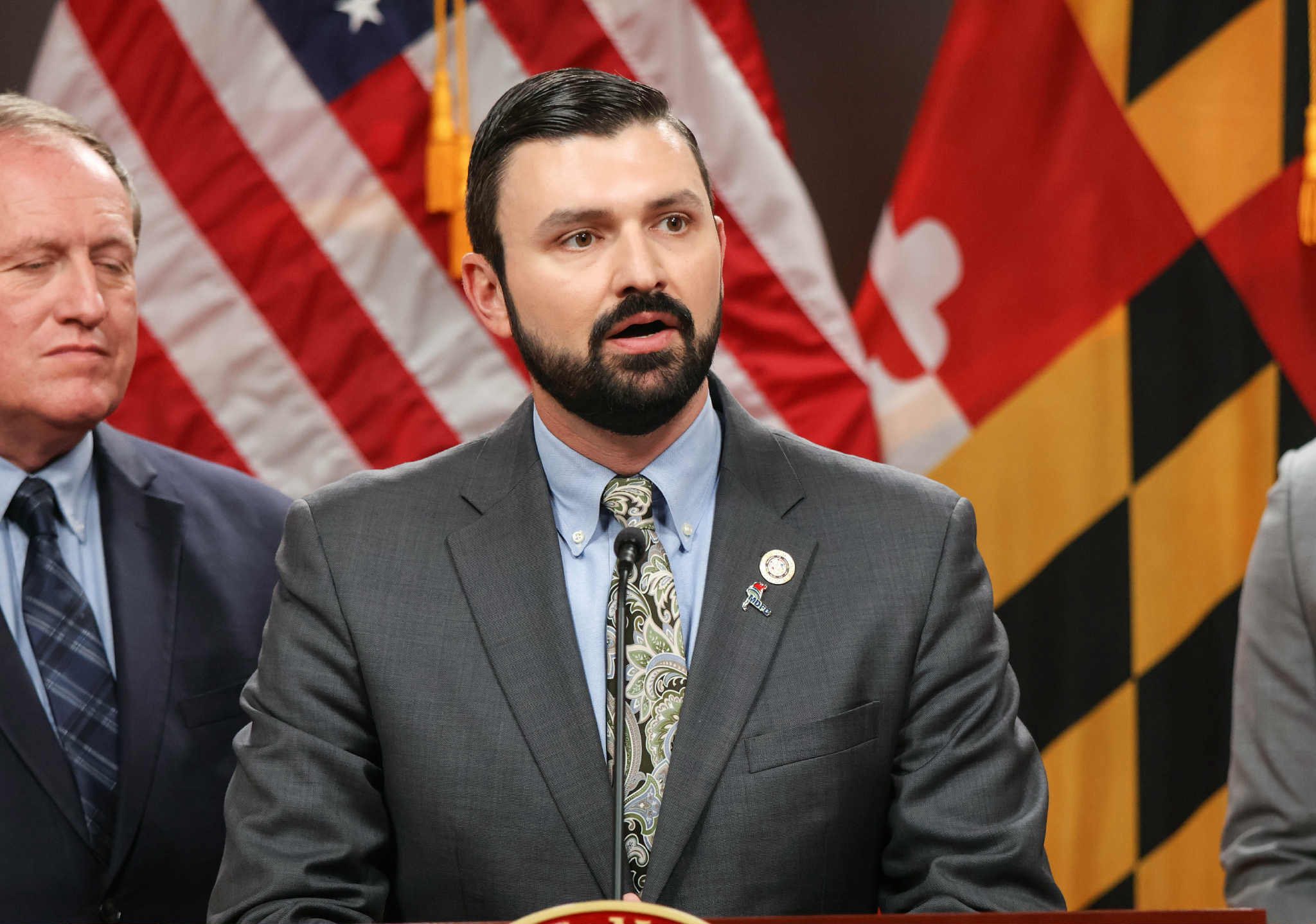
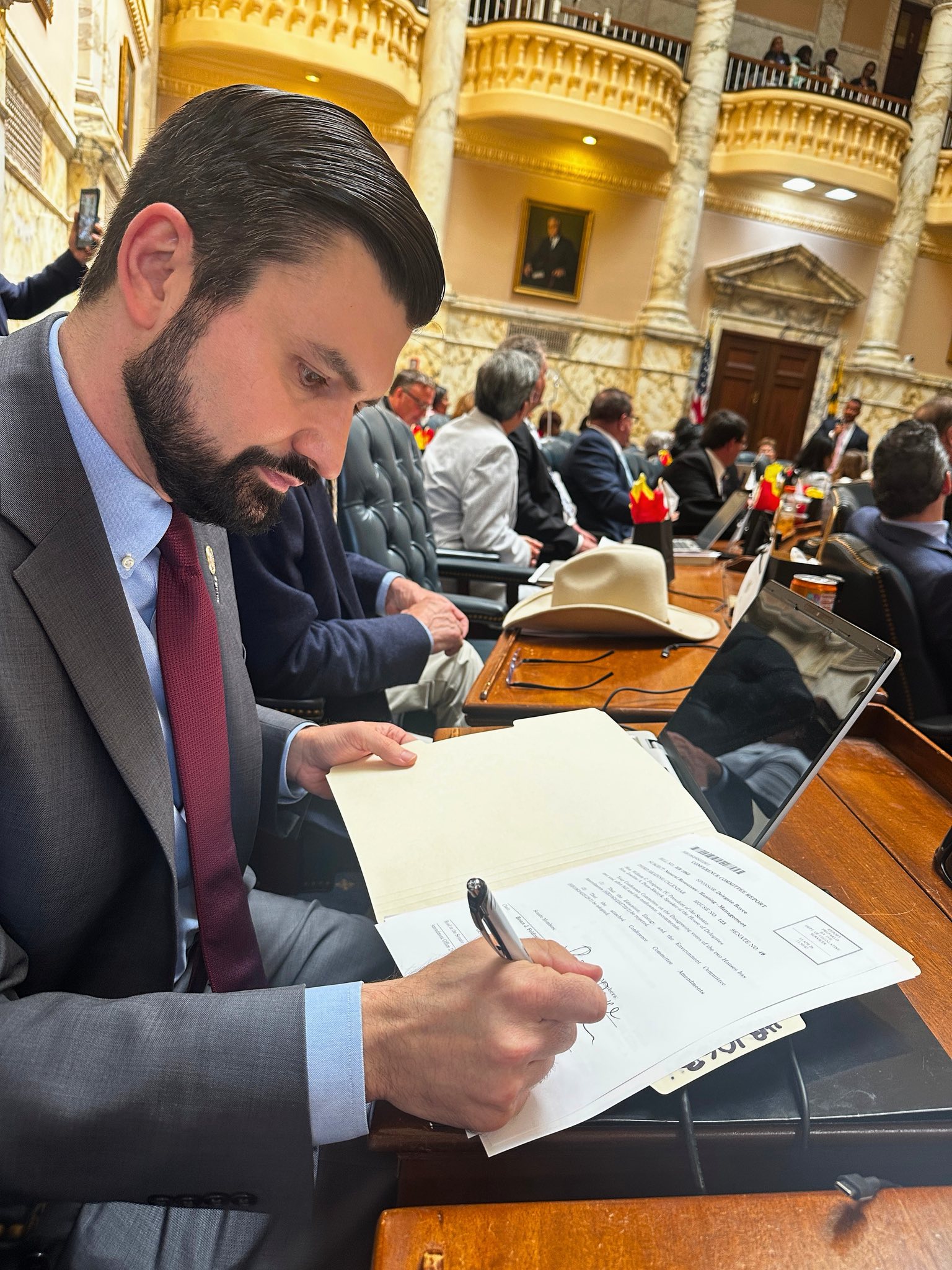
Maryland is facing a challenge that strikes at the very heart of what we hold dear — our homes, our neighborhoods, and our sense of security. During the 2025 Legislative Session, I introduced HB202 — Criminal Law – Fraud – Conveyance, Lease, or Possession of Residential Real Property, a bill designed to address the growing problem of squatting. It is a common-sense solution to protect property owners, hold criminals accountable, and restore faith in the rule of law.
This is not an abstract problem here in Baltimore County. We have all heard the stories now — a homeowner travels for work or a family loses a loved one and leaves a house briefly empty, only to come home and find strangers living inside, claiming a lease that was never signed. In one case that drew statewide attention, squatters took over a Baltimore County home and the owners discovered just how little the law did to help them. Online schemes now coach people on how to move into someone else's property and manufacture paperwork to make the occupation look legitimate.
“A family should never have to fight for months in civil court to remove strangers from the home they own and still pay the mortgage on.”
Here is the part that outrages so many of my constituents: under the way our system works today, this is too often treated as a civil dispute rather than a crime. That means the rightful owner — who is still paying the mortgage, the property taxes, and the utilities — has to hire a lawyer and fight through the courts for weeks or months to remove people who broke in and never had any right to be there. Meanwhile the criminals who exploit the system face little to no consequence. That is backwards.
HB202 fixes that imbalance. It targets the fraud at the center of these schemes — the fake leases and counterfeit documents that organized squatters use — and attaches real, clear penalties to creating and using them. With genuine consequences on the books, the law becomes a deterrent to anyone contemplating the unlawful occupancy of another person's home, and it gives law enforcement a tool to act instead of telling honest families that there is nothing they can do.
I have heard the critics, and I take the concerns seriously. Some worried about the cost of prosecuting new cases and about protecting legitimate tenants. Those are fair points, and good legislation should be careful to distinguish a renter in a real dispute from a criminal who forged a lease. But the answer to that is to refine the bill, not to leave Maryland families defenseless. The status quo already has a cost — it is just paid by the victims instead of the offenders.
This issue is bigger than any one bill. The sanctity of homeownership is a cornerstone of the American dream and a pillar of strong neighborhoods. When government fails to defend basic property rights, it erodes trust in the rule of law itself. I will keep fighting to give Maryland homeowners the protection they deserve, and I am encouraged that the broader effort to speed up the removal of fraudulent occupants has begun to win bipartisan support. We owe that to every family that has worked and saved to own a home in District 7A.