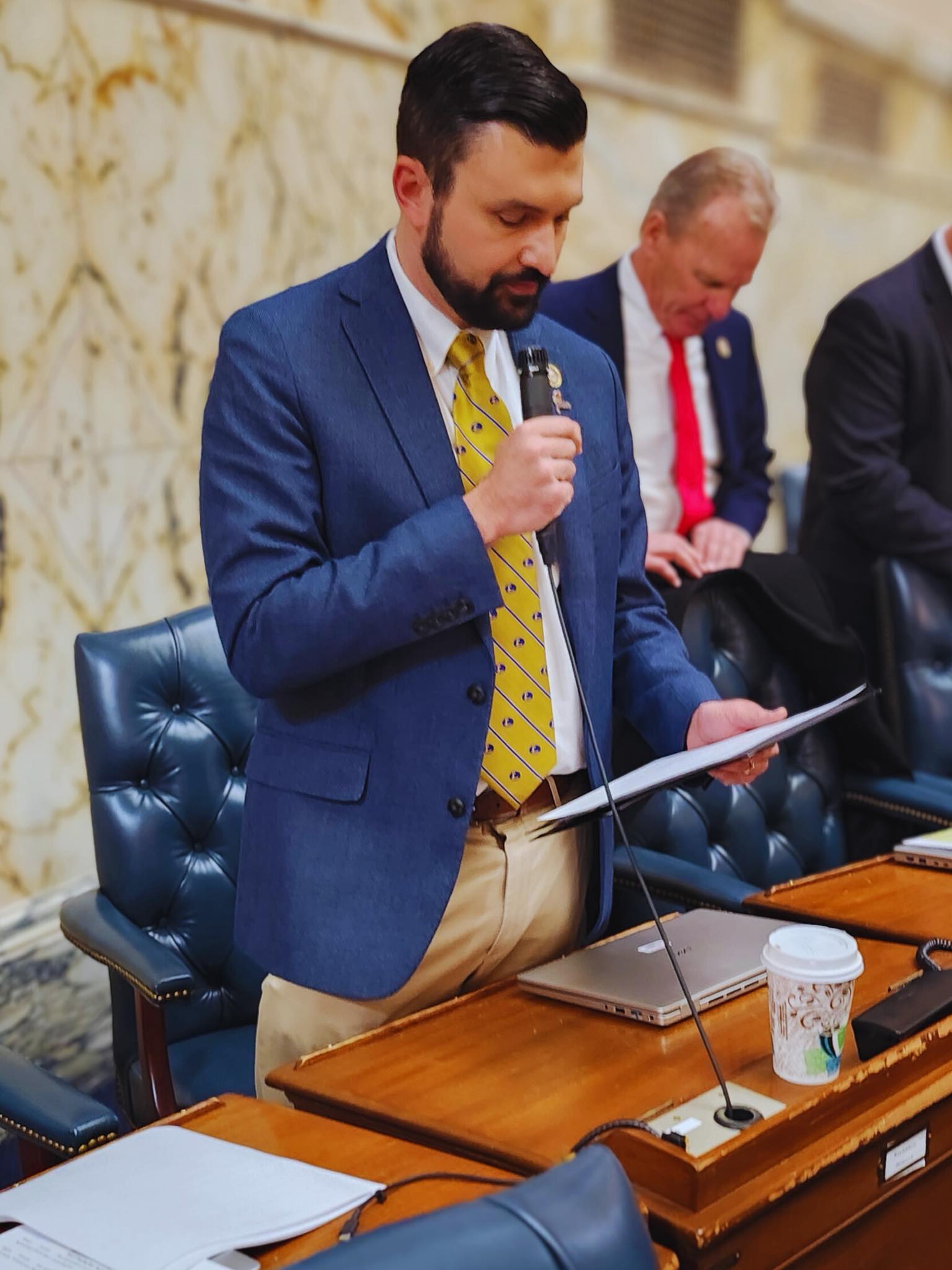
Governor Moore testified before the Environment and Transportation Committee — the committee on which I serve — to support his administration's bill, the Housing Expansion and Affordability Act of 2024 (HB538). During a controversial hearing, the Governor and other proponents faced difficult questions and challenges from committee members on both sides of the aisle. I asked pointed questions about what this legislation does to the guardrails that accompany an Adequate Public Facilities Ordinance (APFO) — the local rules that tie new development to whether our schools, roads, and infrastructure can actually handle it.
An APFO is not red tape for its own sake. It is the mechanism that protects families from overcrowded classrooms and gridlocked roads when builders want to put up more units than the surrounding infrastructure can support. In a fast-growing area like Baltimore County, those protections are essential. Strengthening them — not weakening them — is exactly what our community has been asking for.
“You don't make housing more affordable by steamrolling the safeguards that keep our schools and roads from being overwhelmed by growth.”
That's what makes this so frustrating. Removing or overriding APFO protections is the opposite of what the Baltimore County delegation and the County Council have been requesting for years. In February 2023, the delegates penned a letter on this very issue to then-County Executive Johnny Olszewski and former Council Chairman Julian Jones — and never received a response. We have been sounding the alarm about infrastructure keeping pace with growth for a long time, and Annapolis has now chosen to move in the wrong direction.
The core problem with the state's approach is that it takes zoning and land-use decisions out of local hands and centralizes them in Annapolis. I believe deeply in local control. The people who live in Perry Hall, White Marsh, Middle River, and Kingsville — and the local officials they elect — understand their own neighborhoods far better than a state mandate ever could. A one-size-fits-all density requirement imposed from above ignores the real differences between communities and the real limits of local infrastructure.
I am not against housing or against young families being able to afford a home — far from it. But you don't make housing more affordable by steamrolling the safeguards that keep growth responsible. Affordability comes from reducing the taxes, fees, and regulatory costs that drive up the price of everything, and from letting communities plan growth that their schools and roads can actually support. Stripping local guardrails just shifts the costs onto existing residents and the very families this is supposed to help.
I will keep standing up for local control, for property owners, and for the principle that the people closest to a community should make the decisions that shape it. Our neighborhoods are not Annapolis's to redraw from a desk in the capital. I'll continue asking the hard questions in committee and pushing back on mandates that override the protections our families and our County have spent years working to secure.